
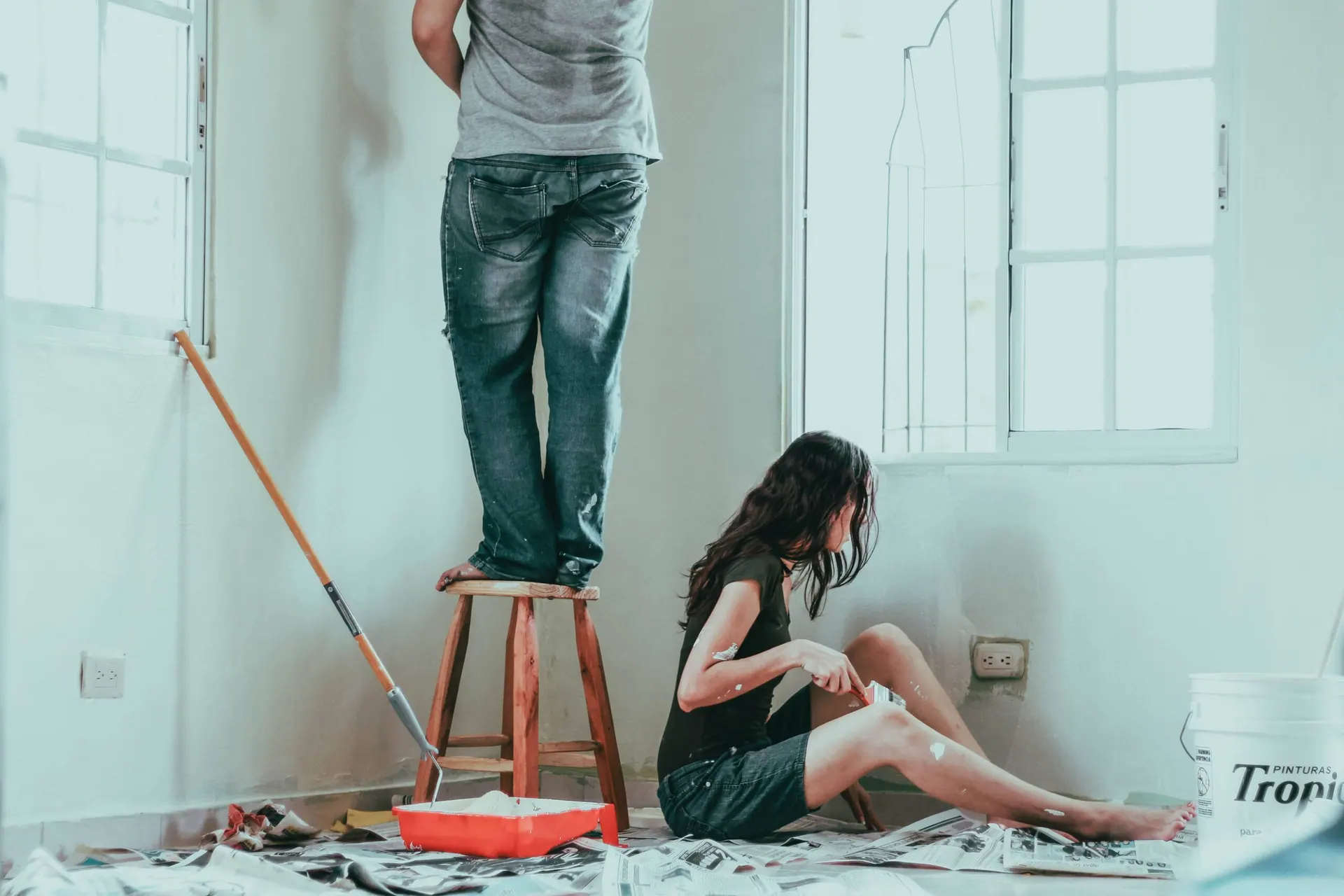
Almost every tenancy agreement contains a clause on cosmetic repairs (Schönheitsreparaturen). But what does the law say? Which work is the tenant obliged to do and what can they leave to the landlord? And what else do they need to bear in mind when moving out of a flat? Here is an overview of the key points.
The tenancy agreement: the basis, but not always legally correct
Understandably, landlords try to protect themselves against financial losses in a tenancy agreement. In doing so, they often – out of ignorance – include clauses that are legally invalid. These range from a smoking ban in the tenant’s own home and prescribed wall colours to requirements to use certain cleaning products and special cleaning rules. A popular topic is cosmetic repairs, which have kept the courts busy for years.
Cosmetic repairs: who has to do which work?
As a general rule, a tenancy agreement is not necessarily valid in every respect just because it has been signed – no matter how old it is or what was agreed. Over time, the legislator has introduced numerous changes that affect not only new but also existing agreements. With regard to cosmetic repairs, for example, the Federal Court of Justice (Bundesgerichtshof, BGH) declared the rigid renovation intervals in the clauses formerly in common use invalid as early as 2015. In 2018 and with a ruling in July 2020 (BGH III ZR 163/18 and VIII ZR 270/18 – Federal Court of Justice), the court clarified who is responsible for cosmetic repairs in a flat that was unrenovated at the start of the tenancy. If you have any doubts or uncertainties, you should always consult an expert.
What counts as cosmetic repairs and what does not?
The legislator has not defined the term cosmetic repairs. According to the German Tenants’ Association (Mieterbund), it covers “everything that has worn out over time through normal living and can usually be renewed with paint, wallpaper and a little plaster”. Cosmetic repairs are therefore not repairs in the conventional sense, but rather the visual upkeep of living space. A tenant must therefore pay for the areas they have “worn out”. Unless otherwise agreed, these include ceilings, walls, radiators, interior doors, windows and exterior doors from the inside and, in some cases, the floors.
The following do not count as cosmetic repairs
- sanding and sealing parquet floors,
- repairing damage to masonry, cracks in ceilings and damaged plaster,
- painting doors and windows on the outside,
- replacing ancient bathtubs,
- replacing carpets laid by the landlord,
- glazing work,
- renovating the stairwell or other communal areas,
- repairing electrical wiring, gas pipes, radiators, light switches and/or door locks, as well as removing