
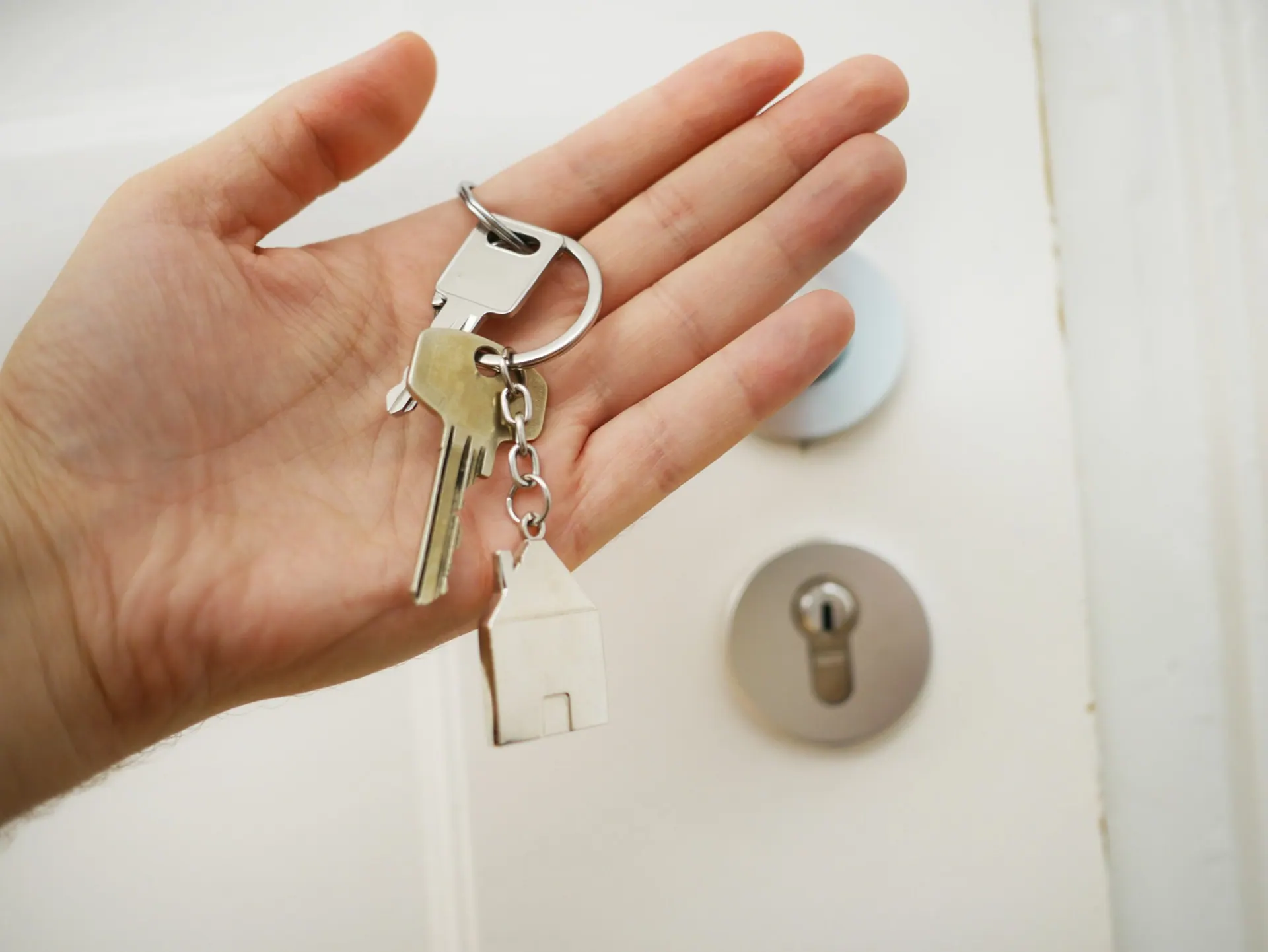
A flat handover takes place when a tenant moves into or out of a flat. To avoid uncertainty and trouble when moving out, tenants should take a close look before moving in to spot any defects. A handover report is recommended for documenting the flat handover.
You have found your new flat, signed the agreement and want to move in as quickly as possible. But before you do, the condition of the flat should be recorded precisely! Tenants should insist on a thorough flat handover, because it is important
to identify any defects at this point. Any damage that goes unnoticed here is difficult to claim later – after all, there is no proof that it already existed when you moved in.
The right time for the flat handover
Tenants should bear a few points in mind even when arranging the appointment. During a flat handover, it is important to notice even small details. It is therefore advisable to choose a time when there is still enough daylight. If that is
not possible, a torch can help. In addition, the previous tenant should already have moved out and completed any planned renovation work: if furniture or moving boxes are still standing on the floor and against the walls
, it is not possible to check thoroughly for damage.
Handover report: documenting the flat handover
To document the flat handover thoroughly, it is advisable to draw up a handover report in duplicate, which both parties sign at the end. This is usually taken care of by the landlord, but if not, tenants should insist on it. Numerous handover report templates are available free of charge online. Photos can also be very helpful when it comes to remembering small details again after a few years.
Meter readings and keys: to be considered at every flat handover
Part of every handover report: the current meter readings for water and electricity and for all installed radiators. Only on this basis can any errors in the next service charge statement be uncovered. Documenting the type and
number of keys handed over (building, flat, garage, cellar, letterbox, etc.) is also a must: if there is disagreement about this when moving out, in the worst case an entire locking system has to be replaced – which can easily cost a four-figure sum.
Down to the last detail: record all damage
Some damage is obvious, other damage is difficult to spot. What matters is that all existing defects are documented during the handover. Common examples are scratches in the parquet floor, cracked tiles, dents in the door frame or even
mould. In addition to visual aspects, tenants should also check that electrical appliances and the heating work and test whether all windows and doors open and close without problems. A quick check of the taps, toilet flush and shower or bath is also a good idea. The best way to keep track is to work carefully from room to room.
Hidden defects: the landlord is responsible
A handover report signed by both parties is a document that is valid in court. Legally, it constitutes a negative acknowledgement of debt. This means that anything not mentioned in it is deemed not to exist. A tenant therefore cannot claim afterwards that undocumented damage already existed before they moved in. The only exceptions are defects that could not be detected at the handover. For example, it is impossible to check whether the heating works in midsummer. If a landlord deliberately conceals a defect they know about so as not to jeopardise the conclusion of the agreement, they are acting fraudulently. In this case, the landlord is obliged to remedy the defect. If they refuse, the tenant can assert their rights through a rent reduction, by contesting the agreement
or by giving notice.